
The short answer
You likely need a new air conditioner if repairs are getting frequent, rooms won't cool evenly, or your summer bills keep climbing. SureBreeze evaluates your home's layout, ducts, and electrical before recommending a central AC, heat pump, or mini-split. You then get a written estimate that explains every cost factor.
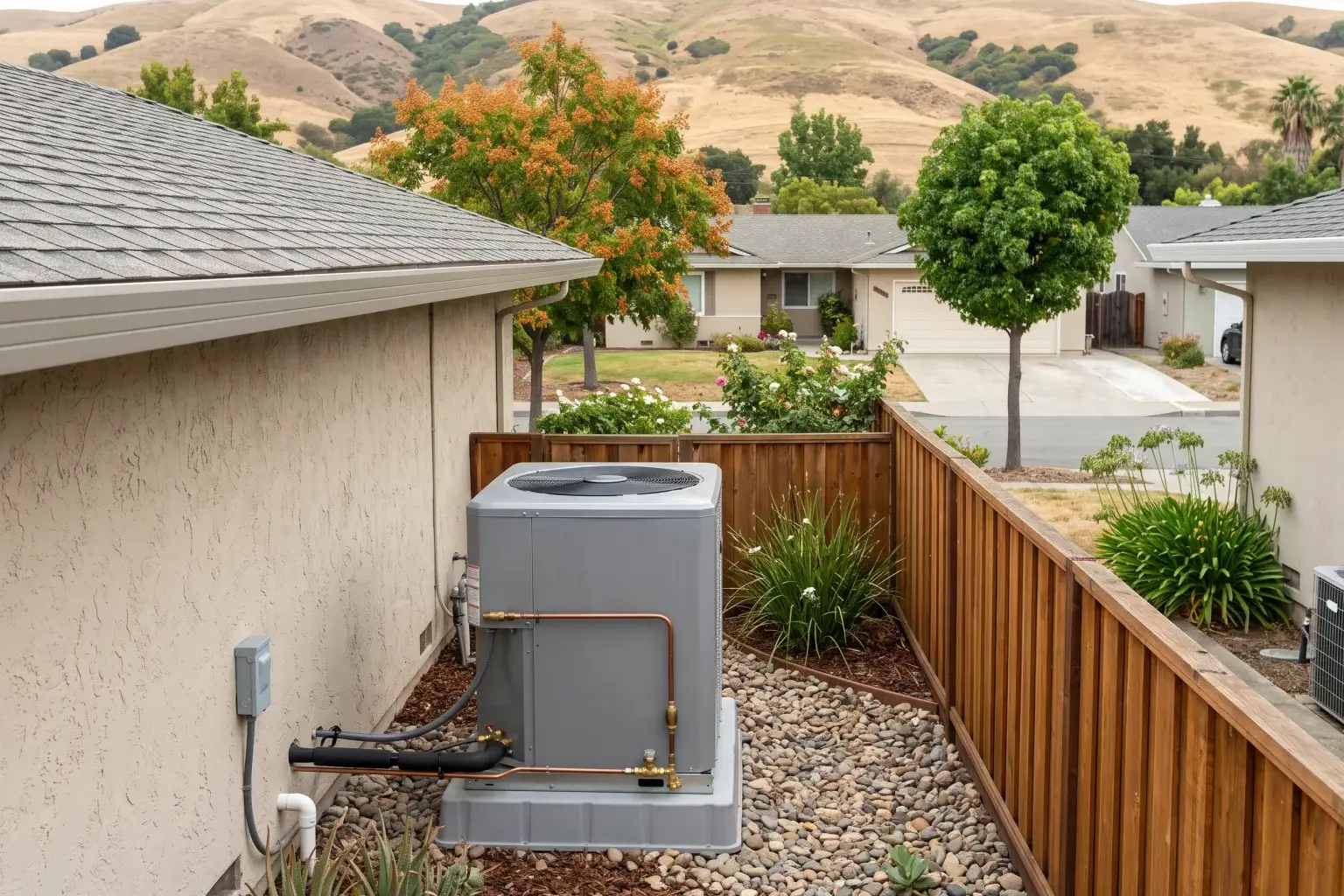
Whether your old air conditioner is wearing out or your home has never had central cooling, a new system is a big decision. In Fremont, Newark, Union City, Milpitas and nearby cities, summers are mostly dry and comfortable, but heat waves still push indoor temperatures up, especially in homes farther from the Bay. SureBreeze AC Repair Service installs central air conditioners, heat pumps, and ductless systems sized for your home rather than guessed from square footage alone. This page explains when replacement makes sense, what we look at before recommending equipment, what drives the cost, and what to expect on installation day.
Signs you may need a new air conditioner
One breakdown doesn't mean you need a new system, but a pattern of problems usually does. If you notice several of the signs below, have the system evaluated before the next hot stretch.
Age matters, but it isn't the whole story. A well-maintained older system may still have useful life left. A newer one that was installed poorly can struggle from the start. We look at the whole picture before we recommend anything.
- The system needs repairs more than once a season, or the same part keeps failing
- Some rooms stay warm while others feel fine, even with the vents open
- The unit runs for long stretches without bringing the temperature down
- Your summer electric bills keep rising even though you use the AC the same way
- Refrigerant has been topped off more than once, which points to a leak
- The outdoor unit is loud, rattles, or is heavily corroded
- Your home has no central cooling, and window or portable units can't keep up
What we check before recommending a system
Correct sizing does more for comfort and efficiency than anything else. An oversized unit turns on and off too often and leaves the air feeling clammy. An undersized one runs nonstop on hot afternoons and still can't keep up. So we don't just copy the size of the old unit. We evaluate the house itself.
Location matters too. Across the Santa Clara Valley, inland and southern areas get noticeably hotter in summer than neighborhoods close to the Bay. That means two homes of similar size can need different cooling capacity.
- Square footage, ceiling height, and floor plan
- Window size, which way the windows face, and how much afternoon sun the house gets
- Attic insulation and air leaks around doors, windows, and ducts
- Condition and sizing of the ductwork, and whether there are enough return vents
- Electrical panel capacity and the circuit that serves the outdoor unit
- Where the indoor and outdoor equipment can go, including clearance and noise near bedrooms or neighbors
Repair or replace: your options
If your system is in reasonable shape and a single part has failed, repair is often the sensible choice, and we'll tell you so. Replacement makes more sense when repairs are frequent, the system is near the end of its life, or it can't keep the house comfortable.
If you decide to replace, there are three common paths:
If your furnace is also getting old, a heat pump is worth a serious look. Under Bay Area Air District rules, natural gas furnaces manufactured from 2029 on must meet a zero-NOx emission standard. In practice, that points homeowners toward heat pumps when they replace a furnace after that date. The rules don't make you replace equipment that still works. They apply only when an existing furnace or water heater fails or is replaced. Planning ahead lets you make the choice on your own schedule instead of during a breakdown.
- Central air conditioner: we replace the outdoor unit and indoor coil and pair them with your existing furnace or a new one
- Heat pump: one system that cools in summer and heats in winter, a good fit for the region's mild, damp winters
- Ductless mini-split: for homes without ducts, for additions, or for rooms the main system doesn't reach
What affects the cost of AC installation
Every home is different, so we give you a written estimate after the in-home evaluation instead of a guess sight unseen. These are the main factors that move the cost up or down:
Incentives can offset part of the cost of a heat pump. Bay Area homeowners can check with BayREN and their local clean energy provider for current heat pump and electrification incentives. Amounts and availability change with each funding cycle, so we confirm the current offer before we include it in a quote. The federal Energy Efficient Home Improvement Credit only covered qualifying heat pumps placed in service before December 31, 2025. It isn't available for installations after that date.
- System type and capacity
- Efficiency level of the equipment
- Whether the existing ductwork can be reused, needs repair, or has to be replaced or added
- Electrical upgrades, such as a new circuit or panel work
- Where the equipment goes and how easy it is to reach the attic, crawlspace, or closet
- Permits and inspections required by your city
- Add-ons such as a new thermostat, zoning, or better air filtration
How an installation visit works
We keep the process simple and tell you what's happening at each step.
Most straightforward replacements take a day or two. Jobs that include new ductwork or electrical upgrades can take longer. We'll give you a realistic timeline before work begins, so you can plan around it.
- Evaluation: a technician inspects your current system, ducts, and electrical, and asks about comfort problems and goals
- Options and estimate: you get a written recommendation with one or more system options and what each one includes
- Scheduling and permits: we schedule the work and handle the permit process with your city
- Installation: the crew protects your floors, removes the old equipment, installs the new system, and connects the refrigerant lines, electrical, and controls
- Testing: we check refrigerant charge, airflow, and temperature difference across the coil, and make sure the thermostat responds correctly
- Walkthrough: we show you how to run the system, how to change filters, and what maintenance it needs
AC Installation by city
- AC Installation in Union City
- AC Installation in Newark
- AC Installation in Pleasanton
- AC Installation in Hayward
- AC Installation in Dublin
- AC Installation in Milpitas
- AC Installation in East Palo Alto
- AC Installation in Menlo Park
- AC Installation in San Ramon
- AC Installation in Livermore
- AC Installation in Sunnyvale
- AC Installation in Mountain View