
The short answer
A heat pump is a strong choice for Fremont homes when a furnace or AC is near the end of its life, or when you want efficient heating and cooling in one system. We check your ductwork, electrical panel and home layout first, then lay out repair, replacement and conversion options so you can decide with clear information.
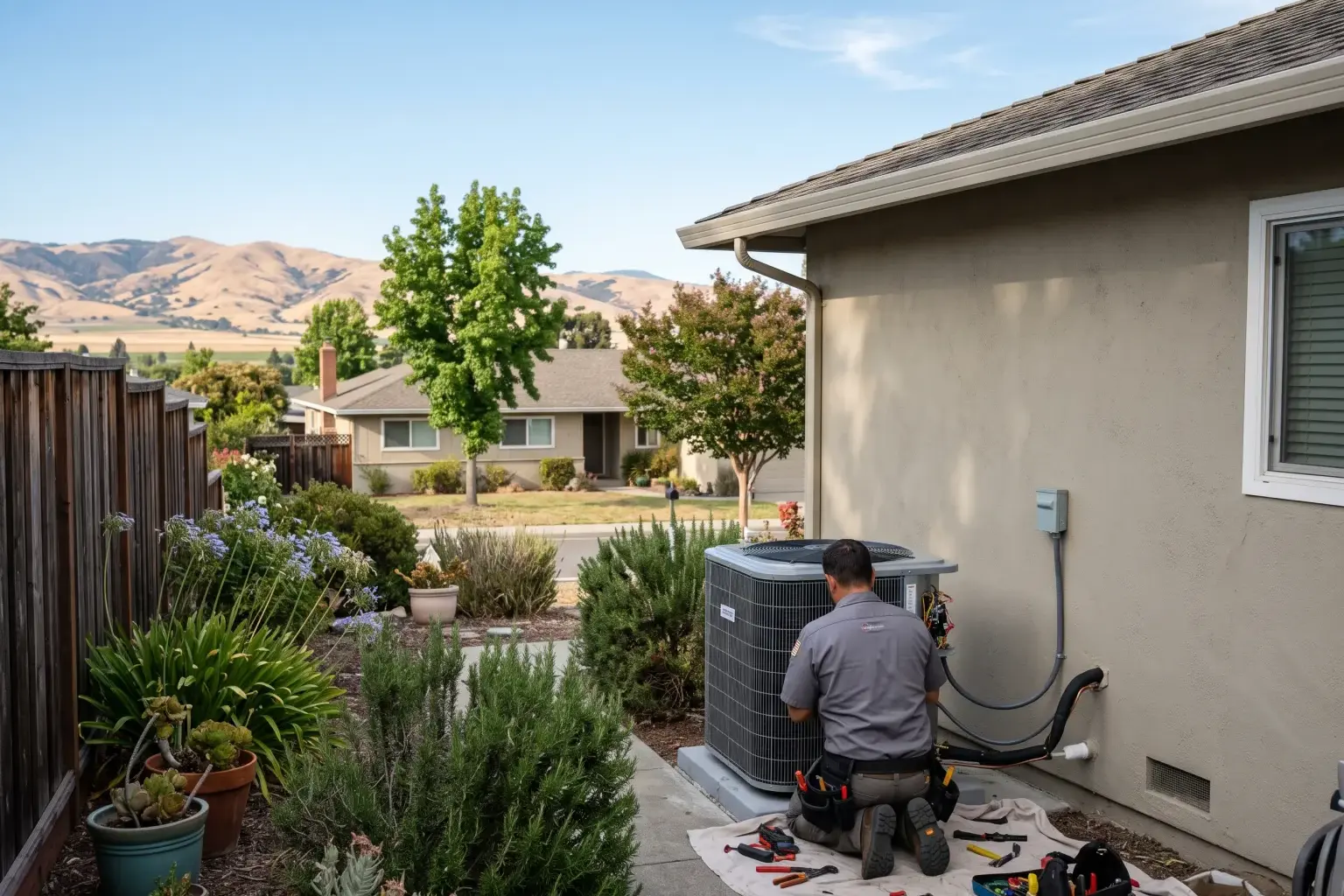
A heat pump heats and cools your home with one system. It moves heat instead of burning fuel to make it. For many Fremont homeowners, a heat pump makes sense when an old furnace or air conditioner is wearing out. It also fits homes that never had central cooling, and homeowners who are planning for the Bay Area's changing appliance rules. SureBreeze AC Repair Service helps homeowners in Fremont, Newark, Union City, Milpitas and nearby cities decide whether a heat pump fits their home. If it does, we install it so it runs quietly and efficiently. This page covers when a heat pump is worth considering, what we look at before recommending one, the choices you have, what drives the cost, and what to expect on installation day.
Signs It May Be Time for a Heat Pump
You don't have to replace equipment that still works well. Some situations make a heat pump worth a serious look, especially when a repair bill is coming and the system is already old.
East Bay summers keep getting warmer, and inland parts of the region run noticeably hotter than areas near the water. Many homes that once got by without air conditioning now need it. A heat pump adds cooling and replaces your heating at the same time.
- Your furnace or air conditioner is aging and needs repairs more often
- Some rooms stay hot in summer or cold in winter even with the system running
- You have no central cooling and summer heat is getting harder to live with
- Your gas furnace needs a major repair, like a heat exchanger or control board
- You want to move away from gas, or you are adding solar panels
- You are remodeling or adding space and need to rethink heating and cooling
What We Check Before Recommending an Installation
We don't size or recommend a heat pump by guesswork. We look at your whole home first, because a heat pump that is too big or too small won't work well and may wear out sooner.
Our technician walks through the house and looks at the equipment you have now. Then we explain what we found in plain language before we talk about options.
- Heating and cooling load, based on square footage, insulation, windows and which way the home faces
- Condition and size of your existing ductwork, including leaks, damage and airflow problems
- Electrical panel capacity and whether a new circuit or a panel upgrade is needed
- Where the outdoor unit can go, with attention to clearance, noise and drainage
- Your current furnace, air handler and thermostat, and whether any of them can be reused
- Rooms that are hard to heat or cool and may be better served by a ductless head
Repair, Replace, or Convert: Your Options
Every home is different, so we explain the choices and the tradeoffs of each. Sometimes the right answer is a repair that buys you more time. Other times, replacing now avoids paying for a repair that only puts off the decision.
Here are the paths most homeowners choose between:
- Repair what you have: a good choice when your current system is fairly new and the problem is simple to fix
- Full heat pump system: replaces both your furnace and AC with a ducted heat pump and a matching air handler
- Dual-fuel setup: pairs a heat pump with your existing gas furnace, which handles heating on the coldest days
- Ductless mini-split: a good fit for homes without ducts, additions, garages converted to living space, or individual problem rooms
- Phased plan: repair now and plan a heat pump replacement for when your current equipment reaches the end of its life
What Affects the Cost of a Heat Pump Installation
We give you a written quote after the home assessment, not before. Each home needs a different amount of work, and a quote based on guesses isn't fair to you. These are the factors that change the scope the most:
- System type: ducted, ductless, or dual-fuel
- Equipment capacity and efficiency rating
- Whether your ductwork can be reused or needs repair, sealing or replacement
- Electrical work, such as a new dedicated circuit or a panel upgrade
- Number of indoor units for ductless systems
- Removal and disposal of old equipment
- Permits and inspections required by your city
- Thermostat and control upgrades
- How easy it is to reach the attic, crawlspace, or the spot planned for the outdoor unit
How a Heat Pump Installation Visit Works
First comes the assessment visit. We inspect your home, take measurements, answer your questions and talk through your options. After that, you get a written proposal that spells out the equipment, the scope of work and any electrical or duct changes.
On installation day, our crew protects your floors and work areas. We remove the old equipment and set the new indoor and outdoor units. Then we connect the refrigerant lines, the electrical wiring and the condensate drain. Before we finish, we test the system in both heating and cooling mode and check airflow and refrigerant levels. We also show you how to use the thermostat. Where a permit is needed, we pull it and schedule the city inspection.
Before we leave, we go over basic care with you, like how often to change filters and how to keep the outdoor unit clear. Regular maintenance helps a heat pump stay efficient for years.
Bay Area Rules and Incentives Worth Knowing
Under Bay Area Air District rules, natural gas furnaces made starting in 2029 must meet a zero-NOx emission standard. In practice, that points homeowners toward heat pumps when they replace a furnace after that date. These rules don't make you replace working equipment. They only apply when an existing furnace or water heater fails or is replaced.
The federal 25C tax credit for heat pumps applied only to systems placed in service before December 31, 2025, so new installations don't qualify. Local incentives may still help. Bay Area homeowners can check BayREN and their local clean energy provider for current heat pump programs. Amounts and availability change with each funding cycle, so we confirm the current offer before including it in any quote.
Heat Pump Installation by city
- Heat Pump Installation in Union City
- Heat Pump Installation in Newark
- Heat Pump Installation in Pleasanton
- Heat Pump Installation in Hayward
- Heat Pump Installation in Dublin
- Heat Pump Installation in Milpitas
- Heat Pump Installation in East Palo Alto
- Heat Pump Installation in Menlo Park
- Heat Pump Installation in San Ramon
- Heat Pump Installation in Livermore
- Heat Pump Installation in Sunnyvale
- Heat Pump Installation in Mountain View