The short answer
Replace your furnace when the heat exchanger is damaged, major parts keep failing, or the system can't keep your home comfortable. Otherwise, a repair is often enough. SureBreeze inspects the whole system in Fremont-area homes and compares gas furnace and heat pump options with you before you decide.
Fremont's winters are mild, but your furnace still needs to start reliably on damp, chilly mornings and run safely for years. When your furnace is failing, or you're planning ahead, SureBreeze AC Repair Service helps you choose between a repair, a new gas furnace, and a heat pump. We serve homeowners in Fremont and nearby cities, including Newark, Union City, Hayward, and Milpitas. This page covers the warning signs, what we inspect, your options, what affects the cost, and what happens during a visit.
Signs You May Need a New Furnace
Most furnaces give some warning before they quit. In our mild climate a heating system can sit idle for months, so problems often show up on the first cold night of the season. If you notice any of the following, have the system checked before you lose heat.
One sign alone doesn't mean you need a new furnace. A dirty flame sensor or a clogged filter can cause short cycling, and both are simple fixes. That's why we diagnose the problem before we recommend anything.
- The furnace short-cycles, turning on and off every few minutes
- Some rooms stay cold while others get too warm
- You hear banging, squealing, or rattling when the blower or burners start
- The burner flame looks yellow or flickering instead of steady blue
- Repairs are getting more frequent, and the same parts keep failing
- Your heating use keeps climbing even though your thermostat habits haven't changed
- Replacement parts for your model are hard to find
- You smell gas or a carbon monoxide alarm goes off. Leave the house first, then call your gas utility or 911
What We Check Before Recommending Anything
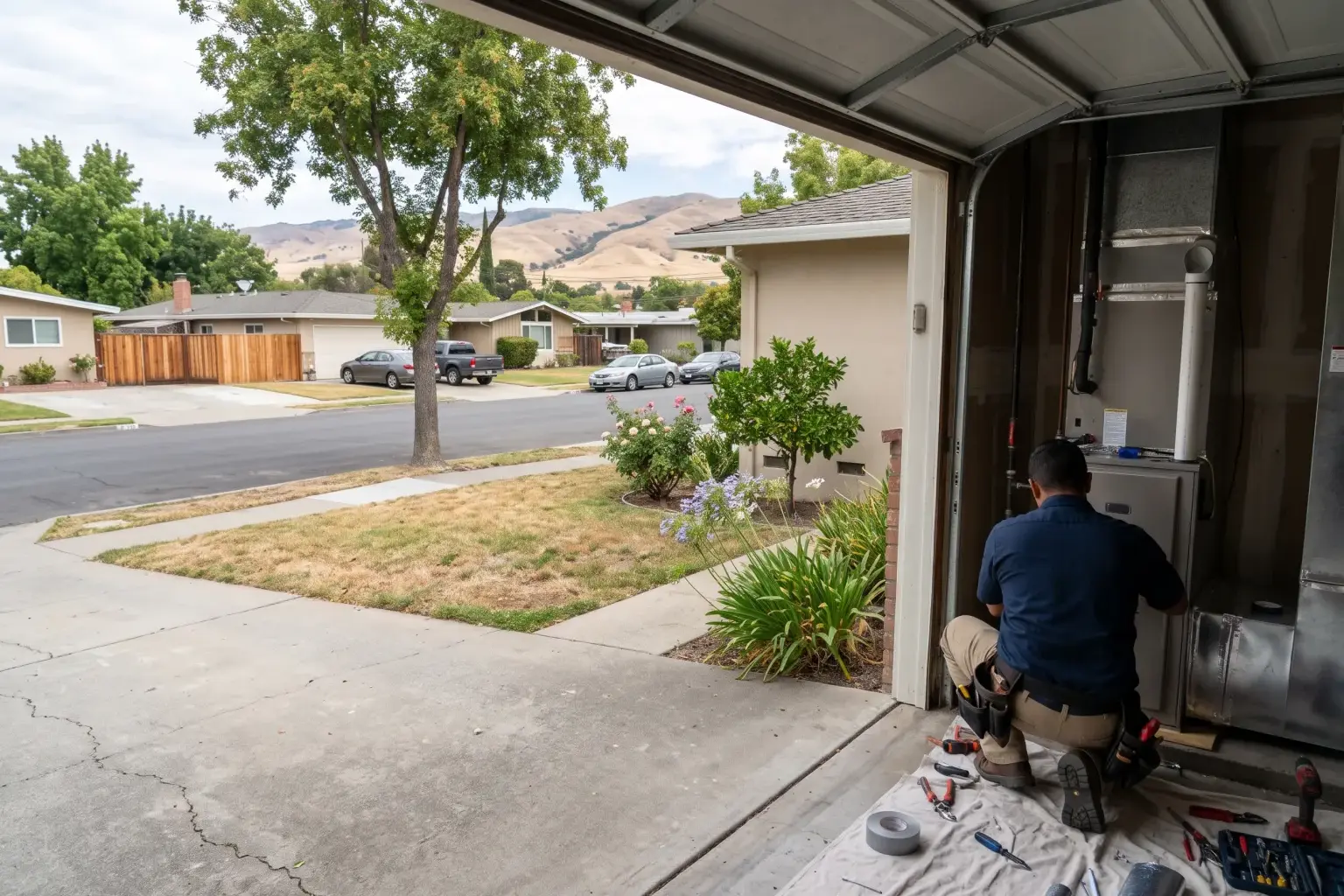
Before we talk about replacement, we inspect the whole system, not just the unit in the garage, closet, or attic. A new furnace connected to leaky ducts or the wrong venting won't perform the way it should.
We also ask how your home feels through the year: which rooms are uncomfortable, whether you have central air, and how long you plan to stay. Those answers affect sizing and equipment choice as much as the measurements do.
- Heat exchanger condition, including cracks or corrosion that could let combustion gases escape
- Burners, igniter, flame sensor, and gas valve
- Venting and flue routing, including clearances and draft
- Blower motor and airflow through the system
- Ductwork condition, leaks, and insulation in attics or crawlspaces
- Thermostat wiring and settings
- Filter size and access, and the return air path
- Gas line sizing and electrical supply, which matter if you change equipment type
Repair, Replace, or Switch to a Heat Pump
If the furnace is basically sound and the problem is a single part, a repair is usually the sensible choice, and we'll tell you when that's the case. Replacement makes more sense when the heat exchanger is damaged, when major components fail one after another, or when the system is so poorly matched to the home that it never keeps you comfortable.
If you replace the furnace, you have two main paths. A new gas furnace is a like-for-like swap that often works with the existing venting and gas line after modest changes. A heat pump handles both heating and cooling, which suits our climate of mild, damp winters and warm, dry summers. If you also want air conditioning, or your current AC is near the end of its life, one heat pump can replace both.
Local air quality rules also matter. Under the Bay Area Air District's Rule 9-4, natural gas furnaces manufactured from 2029 on must meet a zero-NOx emission standard. In practice, that points homeowners toward heat pumps when they replace a furnace after that date. These rules don't require you to replace working equipment. They apply only when an existing furnace fails or is replaced. If your furnace is aging, decide which path you prefer before an emergency forces the decision.
If you're also planning to replace a gas water heater, check the current status of the Air District's Rule 9-6 first. Its zero-NOx date for small water heaters was set for 2027, and the Air District Board has been considering amendments in November 2026 that could delay it.
What Affects the Cost of Furnace Installation
We quote every installation after we see the home. The main cost factors are:
Incentives can cover part of the project. The federal Energy Efficient Home Improvement Credit (25C) covered qualifying heat pumps placed in service before December 31, 2025, so it isn't available for new installations now. Bay Area homeowners can still check BayREN and their local clean energy provider for current heat pump and electrification incentives. Amounts and availability change with each funding cycle, so we confirm the current offer before including it in a quote.
- Equipment type: gas furnace, heat pump, or a dual-fuel combination
- System capacity, based on your home's size, insulation, windows, and layout
- Efficiency level and features such as variable-speed blowers or modulating burners
- Where the unit sits: garage, closet, attic, or crawlspace, and how easy it is to reach
- Venting changes, especially when moving to a high-efficiency condensing furnace
- Duct repairs, sealing, or redesign
- Electrical upgrades, which some heat pump installations need
- Permits and inspections required by your city
- Thermostat or zoning upgrades
How a Visit Works
Here's what to expect from start to finish:
Most straightforward furnace replacements are finished in a day. Heat pump conversions and jobs that include ductwork can take longer, and we'll give you a clear timeline before work begins.
- You contact us, describe the problem or project, and pick a time that works for you
- A technician inspects the furnace, venting, ducts, and controls and explains the findings in plain terms
- If a repair makes sense, we say so. If replacement does, we compare the options side by side
- You receive a written quote covering equipment, labor, and any duct, venting, or electrical work
- We pull the required permit and schedule the installation
- On installation day, we protect your floors, remove the old unit, set the new equipment, and connect the gas, power, venting, and controls
- We start the system, check combustion or refrigerant readings and airflow, and show you how to use the thermostat and change the filter
- The city inspector reviews the work and signs off on the permit