
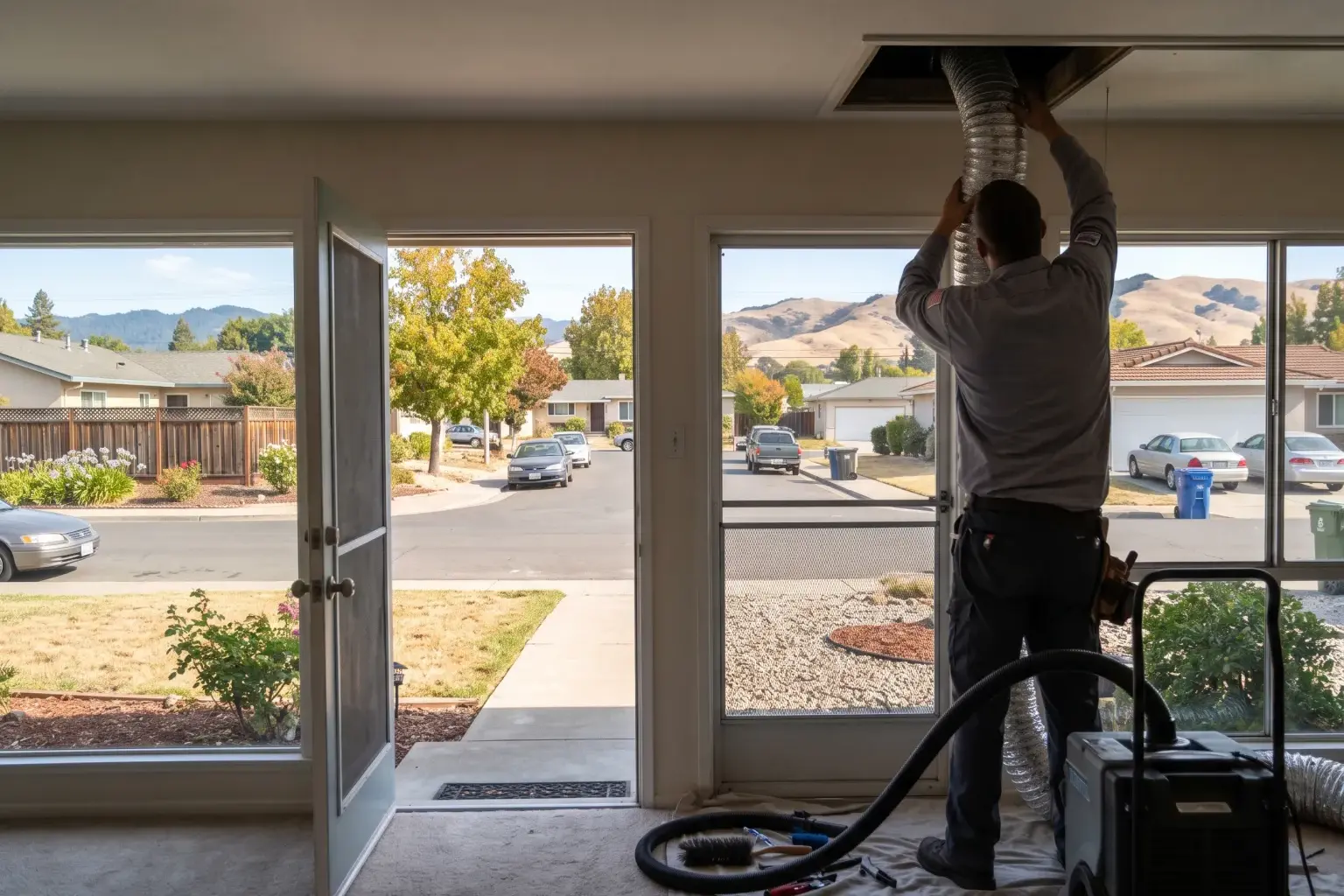
The short answer
Duct cleaning makes sense when you can see buildup, smell mustiness, find pest signs, or have just finished a renovation. We inspect first, then recommend cleaning, sealing, repair, or replacement based on what we find, not by default.
The ducts behind your walls and ceilings carry every bit of heated and cooled air in your home. Over time they collect dust, debris, and sometimes pest droppings or construction leftovers, and they can come loose, crack, or sag. SureBreeze AC Repair Service cleans and inspects duct systems for homeowners in Fremont, Newark, Union City, Milpitas, and surrounding areas. We start by looking at what is actually inside your ducts. Not every home needs a full cleaning, and sometimes the real problem is a leak, a crushed run, or a filter issue. This page explains how to tell when cleaning makes sense, what we look at, and how a visit works.
Signs Your Ducts May Need Cleaning
Most ducts don't need cleaning on a fixed schedule. A home with good filters, no pets, and no recent construction can go a long time without it. But certain signs are worth paying attention to, especially if more than one shows up at once.
If you notice any of the following, it's reasonable to have the ducts inspected:
- Visible dust or debris blowing out of supply registers when the system starts
- Gray buildup on register grilles that comes back quickly after you wipe it off
- A musty or stale smell when the heat or air conditioning runs
- Signs of rodents or insects, such as droppings, nesting material, or chewed insulation near ducts
- Recent remodeling, drywall work, or floor sanding while the system was running
- Rooms that get noticeably less airflow than they used to
- Visible mold-like growth on duct surfaces, registers, or the air handler
- You've moved into a home and don't know when the ducts were last checked
What We Check During an Inspection
Before recommending anything, we look at the whole air path, from the return grilles to the equipment to the farthest supply register. Cleaning a duct system without checking its condition can miss the problem you actually called about.
Where ducts are accessible in the attic or crawlspace, we look at them directly. Where they aren't, we use what we can see at the registers, returns, and equipment connections to judge their condition and tell you plainly what we could and couldn't reach.
- Amount and type of buildup inside supply and return ducts
- Return air paths, which often collect the most debris
- Filter fit, size, and condition, including gaps that let air bypass the filter
- Blower and coil area for dust or growth that can feed back into the ducts
- Duct connections, joints, and boots for leaks or separations
- Flexible duct runs for kinks, crushing, sagging, or torn outer jackets
- Insulation on ducts running through the attic or crawlspace
- Evidence of pests or moisture
Clean, Repair, or Replace: Your Options
After the inspection, we explain what we found and which option fits your home. In many cases the answer is a combination.
Cleaning is the right call when the ducts are in sound condition but have real buildup, debris, or contamination. We use equipment that puts the system under negative pressure and agitates the duct surfaces so loosened material is pulled out rather than blown into your rooms.
Repair makes sense when sections have come apart, joints are leaking, or a run is crushed or kinked. Resealing connections and fixing damaged sections can restore airflow to weak rooms and keep attic or crawlspace air from being pulled into the system.
Replacement is worth discussing when ducts are badly deteriorated, contaminated beyond what cleaning can handle, poorly insulated, or sized in a way that doesn't fit your equipment. Older flexible duct with failing jackets or brittle insulation is a common example. If you're planning to replace your heating and cooling equipment, it's a good time to evaluate the ducts too. Under Bay Area Air District rules, gas furnaces made from 2029 on must meet a zero-NOx standard, which points many homeowners toward heat pumps when a furnace is replaced after that date. Those rules don't require you to replace working equipment, but if a change is in your future, it helps to know whether your ducts are ready for it. BayREN and your local clean energy provider may offer heat pump incentives; we confirm the current offer before quoting it.
What Affects the Cost
We give you a specific quote after the inspection, because the cost depends on your home and what the ducts need. These are the main factors:
- Size of the home and number of supply and return registers
- Number of HVAC systems serving the house
- How accessible the ducts are, such as tight attics, low crawlspaces, or ducts in finished ceilings
- Duct material, since sheet metal, duct board, and flexible duct are handled differently
- How much buildup or debris is present
- Whether pest cleanup, sealing, or section repairs are needed
- Whether the blower, coil, or other equipment also needs cleaning
- Whether any runs need to be replaced rather than cleaned
How a Visit Works
When you contact us, we ask a few questions about what you're noticing, the age of your home, and where your ducts run. Then we schedule a time that works for you.
At the visit, the technician walks through the home, checks registers and returns, inspects the equipment, and looks at accessible ductwork. We'll show you what we find, including photos when ducts are out of sight. Then we explain your options and give you a quote before any work begins.
If you approve cleaning, we protect floors and furniture near work areas, cover registers, connect our equipment, and work through the system section by section. When we finish, we reinstall grilles, check the filter, run the system, and confirm airflow at the registers. If we also recommended repairs, we'll walk you through what was done and what to watch for going forward.