
The short answer
A ductless mini-split is often a good fit when you need heating and cooling in rooms that ducts don't reach, have no ducts at all, or want to move off a gas furnace. We check your rooms, electrical panel, wall locations, and existing equipment before recommending one, then explain whether a mini-split, a repair, or a full replacement makes more sense.
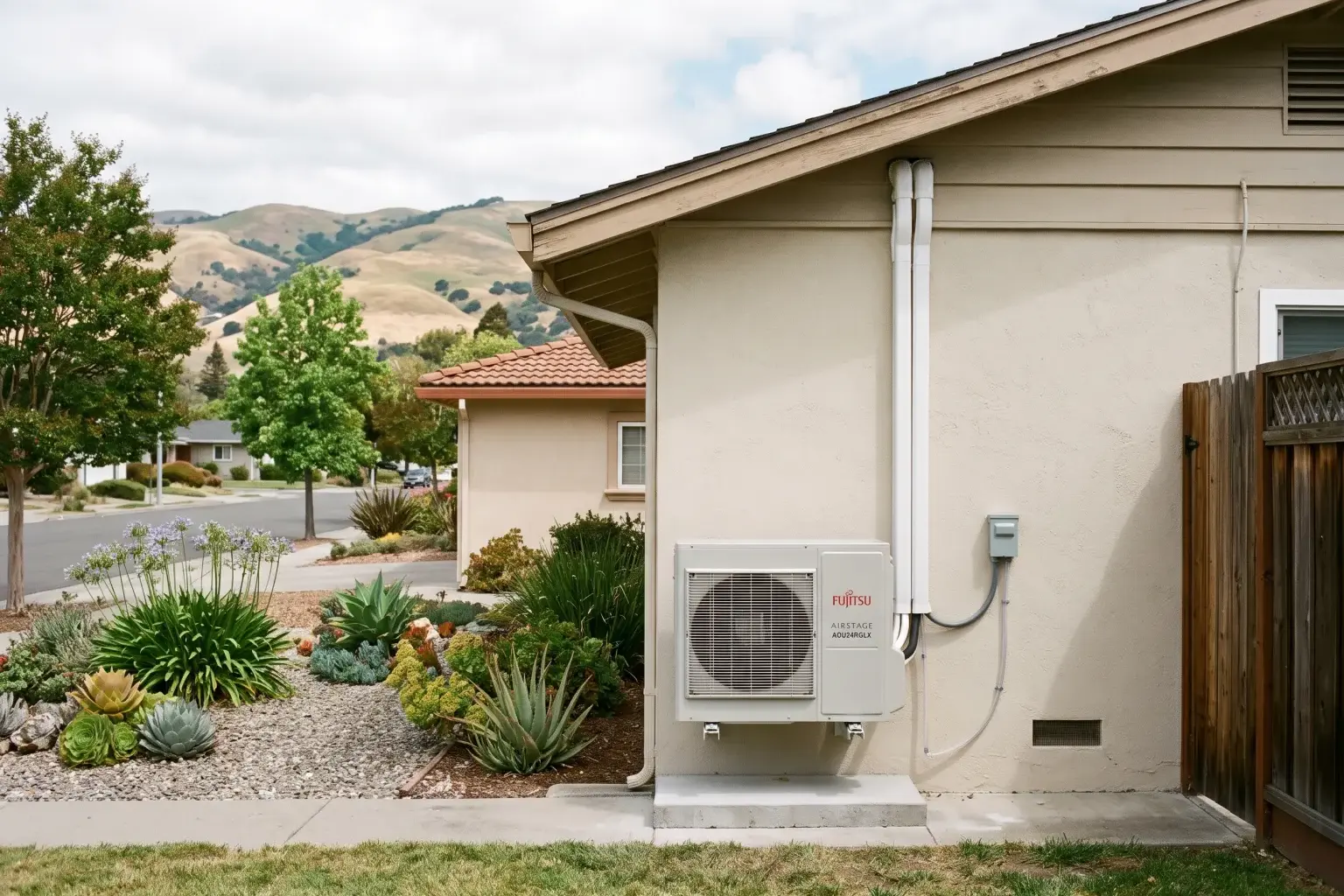
A ductless mini-split heats and cools a room or a group of rooms without ductwork. An outdoor heat pump connects to one or more indoor units through a small refrigerant line set that runs through a hole in the wall. SureBreeze AC Repair Service installs mini-splits for homeowners in Fremont, Newark, Union City, Milpitas, and surrounding communities. This page covers when a mini-split makes sense, what we look at before recommending one, how it compares with repairing or replacing what you have, what drives the cost, and what happens during a visit.
Signs a Ductless Mini-Split May Be Right for Your Home
Mini-splits solve specific problems well. They are rarely the answer for every home, but they are worth a serious look if any of the situations below sound familiar.
Climate matters too. Homes near the Bay usually stay mild, while inland parts of the Santa Clara Valley, toward Milpitas and San Jose, run noticeably hotter in dry summers. Winters are mild and damp. A heat pump mini-split can handle both cooling and heating in that range, which is why many homeowners consider one instead of adding a separate air conditioner.
- A bedroom, office, or addition stays hot in summer or cold in winter even when the rest of the house is comfortable.
- Your home has no ductwork, or the ducts are damaged, undersized, or hard to reach.
- You converted a garage, attic, or sunroom and the central system doesn't serve it.
- You rely on window units or space heaters and want something quieter and more permanent.
- Your gas furnace is aging and you are thinking about switching to electric heating and cooling.
- Family members disagree about temperature, and you want separate control in different rooms.
What We Check Before Recommending a System
A mini-split only works well if it is sized and placed correctly. An oversized unit cycles on and off and leaves rooms clammy. An undersized one runs constantly and still falls short on hot afternoons. Before we suggest equipment, we look at the house itself rather than relying on square footage alone.
- Room size, ceiling height, window area, sun exposure, and insulation in each space you want to condition.
- Your electrical panel's capacity and whether there is room for a new dedicated circuit.
- Good wall or ceiling locations for indoor units, with clear airflow and a practical path for the line set and condensate drain.
- A level, accessible outdoor location for the condenser that keeps noise away from bedrooms and neighbors.
- The age, condition, and fuel type of your current heating and cooling equipment, if you have any.
- How you actually use each room, such as a home office used during the day or a bedroom used only at night.
Repair, Replace, or Add a Mini-Split?
Not every comfort problem calls for new equipment. If your central system is in reasonable shape and the issue is a failed part, a refrigerant leak, or a duct problem, a repair may be the simpler fix. We will tell you when that is the case.
If your central air conditioner or furnace is near the end of its life, you have a few options. You can replace it with a similar system, replace it with a ducted heat pump, or go ductless with one or more mini-splits. Some homeowners keep a working central system and add a single mini-split for one problem room.
Regulations are part of the picture. Under Bay Area Air District rules, natural gas furnaces manufactured from 2029 must meet a zero-NOx emission standard, which in practice points homeowners toward heat pumps when a furnace is replaced after that date. Those rules do not require you to replace working equipment. They apply only when a furnace or water heater fails or is replaced. So there is no need to rush, but it is reasonable to plan ahead if your furnace is getting old.
What Affects the Cost of a Mini-Split Installation
Every installation is different, so we price each one after seeing the home. These are the main factors that move the cost up or down.
On incentives, the federal Energy Efficient Home Improvement Credit (25C) covered qualifying heat pumps placed in service before December 31, 2025. It is not available for new installations after that date. Bay Area homeowners can still check BayREN and their local clean energy provider for current heat pump and electrification incentives. Amounts and availability change with each funding cycle, so we confirm the current offer before including it in a quote.
- How many indoor units you need, and whether they connect to one multi-zone outdoor unit or several single-zone units.
- The type of indoor unit: wall-mounted, ceiling cassette, floor console, or concealed ducted.
- Equipment capacity and efficiency level.
- Line set length and how difficult the route is through walls, attics, or crawl spaces.
- Electrical work, including new circuits or panel upgrades.
- Condensate drainage, such as whether a pump is needed.
- Removal of old equipment and any permits your city requires.
How a SureBreeze Visit Works
It starts with a conversation about which rooms are uncomfortable, how you use them, and what equipment you have now. A technician then visits your home to measure rooms, check the electrical panel, and look at possible indoor and outdoor unit locations. We walk through the options with you and point out tradeoffs, like where a unit will be visible or where the line set will run on the outside wall.
You receive a written proposal that lists the equipment, unit locations, and scope of work. On installation day, we protect floors and furniture, mount the indoor and outdoor units, run and connect the line set, pull a vacuum on the system, and check for leaks before charging and starting it. Before we leave, we show you how to use the remote, set schedules, and clean the filters, and we answer any questions.